
Hazar Haute Couture | October 19, 2026
QUICK ANSWER
What Are the Most Important Emirati Wedding Traditions?
Emirati wedding traditions commonly include family involvement in the proposal, the Aqd and mahr, Al Zahba bridal preparations, and Laylat Al Henna. Wedding celebrations may be held separately for men and women and feature traditional attire, generous hospitality, and cultural performances such as Al Ayyala. Customs vary by family, and not every Emirati tradition is an Islamic requirement.
Emirati weddings bring together faith, family, heritage, and celebration, but customs can differ between families and generations, particularly as contemporary preferences become part of the occasion. This guide explores Emirati wedding traditions, including what comes from Emirati culture, what has broader Islamic roots, and how couples make these traditions their own today.
Key Takeaways
- Emirati wedding celebrations blend sacred Islamic marriage contracts (Aqd) with rich cultural traditions like Al Zahba and Laylat Al Henna.
- Modern couples often balance traditional heritage, such as separate celebrations for men and women and Al Ayyala performances, with contemporary personalized styling.
- Wedding attire ranges from bespoke white gowns for brides and traditional kanduras with bishts for grooms to formal dress codes for guests.
Table of Contents
How Emirati Weddings Traditionally Begin
Family has long played an important role in UAE wedding traditions. Traditionally, the journey toward marriage involves both families, beginning with a formal proposal before moving toward the marriage agreement.
Today, the way couples and families approach these customs can vary, but family involvement remains an important part of many Emirati weddings.
Family Involvement and Engagement
Traditionally, the process begins with Al Khoutha, the formal proposal. The groom’s family approaches the bride’s family to ask for her hand in marriage, bringing both families into the discussion early on.
While the family is involved, the choice to marry rests with the couple. Relatives may play a role in introductions, discussions, and preparations, but the marriage ultimately depends on the couple’s agreement.
Mahr and the Marriage Agreement
After the proposal comes the Aqd, or marriage contract. This formalizes the marriage and includes an agreement on the mahr, the marriage gift that the groom gives to the bride.
Although these steps form part of many Emirati wedding traditions, mahr itself comes from Islamic marriage practice rather than being uniquely Emirati. It also belongs to the bride, making “marriage gift” a clearer description than the sometimes-used English translation “dowry.”
Once the agreement is in place and wedding preparations move forward, attention turns toward the celebrations and traditions leading up to the big day.
Emirati Wedding Customs: What Happens Before the Big Day
Once the marriage agreement is in place, preparations turn toward the celebrations ahead. Some of these customs center on preparing the bride and bringing family and friends together before the wedding itself. While similar practices appear in Arabic wedding traditions more broadly, their details can differ across cultures and families.
Al Zahba and Bridal Preparations
Al Zahba traditionally refers to the gifts and preparations for the bride. These may include jewelry, perfume, clothing, and other items presented ahead of the wedding. The tradition reflects the wider involvement of family in helping the bride prepare for married life.
The Henna Night
Laylat Al Henna, or Henna Night, is traditionally a gathering for the bride and the women close to her. Henna is applied to the bride’s hands and feet as part of the preparations, creating a shared moment with female relatives and friends before the wedding.
Henna celebrations appear across many Middle Eastern wedding traditions, but how people observe them can vary. In Emirati culture, it remains closely associated with weddings and other joyful occasions, as well as beauty and personal adornment.
What Happens During Emirati Weddings
A traditional Emirati wedding ceremony can include several events rather than one ceremony or reception. Men and women celebrate separately, though arrangements can vary by family. The women’s celebration often centers on the bride, while the men’s gathering brings together the groom, relatives, and other guests.
In some celebrations, the groom later enters the women’s reception, sometimes accompanied by close male relatives. His arrival is typically announced beforehand, giving women time to don hijab if they wish.
Separate celebrations can allow the bride and her female guests to enjoy the occasion more freely. However, contemporary couples and families may adapt the format according to their own preferences and traditions.
What to Wear to an Emirati Wedding
Wedding attire can reflect both Emirati traditions and contemporary style. What someone wears also depends on their role in the celebration, the family’s preferences, and the formality of the event.
For the Bride
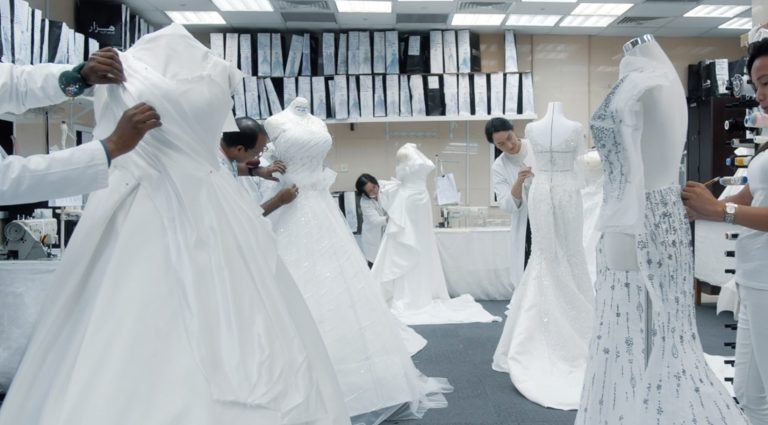
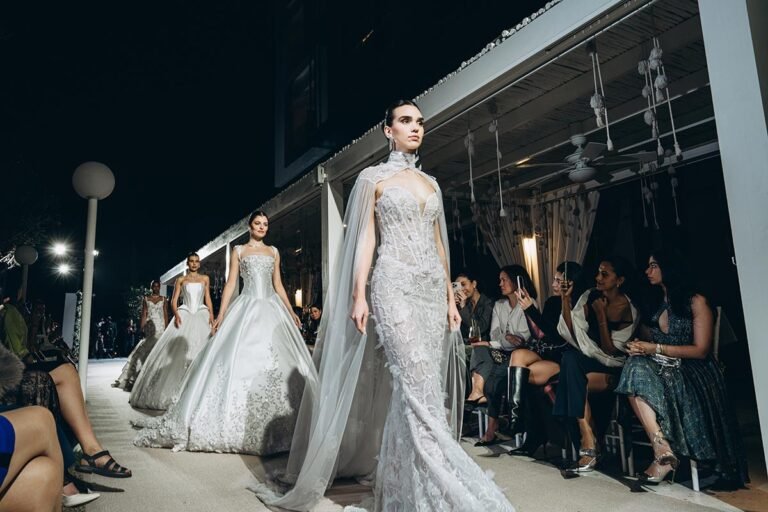
Emirati brides today often choose a long white wedding gown, with the design ranging from modest, structured silhouettes to more elaborate couture styles. Rather than following one prescribed look, a bride can choose the coverage, silhouette, embellishment, and detailing that feel right for her celebration.
For brides exploring their options, current wedding dress trends can provide inspiration while leaving room for a gown that reflects personal style and any traditions important to the family.
For the Groom
The groom traditionally wears a white kandura, often paired with a bisht for the wedding. The bisht is a formal cloak worn over the kandura and may feature decorative trim, adding distinction to the groom’s attire.
For the Bridal Party
Contemporary weddings may also include bridesmaids or other members of the bridal party. Their dresses can complement the bride’s gown and overall wedding aesthetic without competing with her look.
A bridesmaid dress guide can help with decisions about color, silhouette, fabric, and coordinating styles across the bridal party.
For Wedding Guests
When deciding what to wear to an Emirati wedding, start with the invitation and any guidance from the hosts. Expectations can vary between families, particularly at women’s celebrations. Female guests may wear elegant evening dresses, while some families or occasions call for more conservative coverage.
An Emirati wedding guest dress should ultimately suit both the formality of the occasion and the hosts’ expectations. Male guests should likewise follow the stated dress code rather than assume they are expected to wear Emirati national dress.
Table: Emirati Wedding Attire at a Glance
Wedding attire can vary according to the family, celebration, and individual preferences, with traditional and contemporary elements often appearing together.
| Who/Occasion | Traditional Elements | Contemporary Considerations |
|---|---|---|
| Bride on henna night | Festive attire accompanied by henna applied to the hands and feet | The bride may choose an outfit that reflects the theme, setting, and style of her henna celebration |
| Bride on wedding day | Bridal attire may reflect family and Emirati traditions | Long white wedding gowns are common today, with brides choosing their preferred silhouette, coverage, embellishment, and couture details |
| Groom | White kandura, often with a bisht for the wedding | Styling and finishing details can reflect the formality and preferences of the groom |
| Female wedding guest | Elegant attire suited to the celebration and the family’s expectations | Evening dresses can range in silhouette and style, with coverage adapted to the dress code and setting |
| Male wedding guest | Formal attire appropriate to the occasion | Guests should follow the invitation or hosts’ guidance rather than assume Emirati national dress is expected |
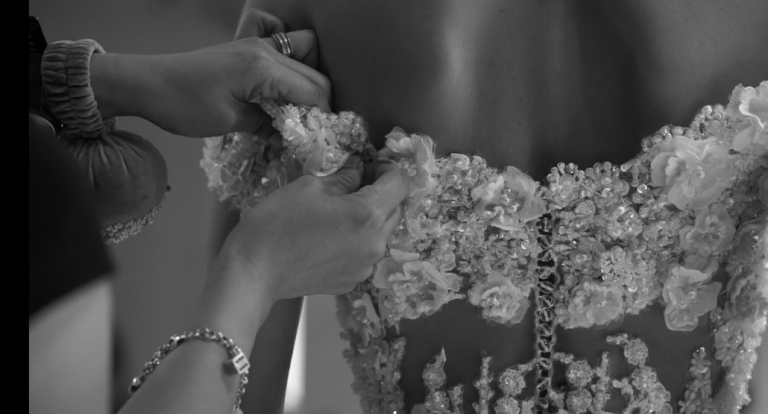
A wedding gown should feel personal to the bride. We look at the silhouette, coverage, details, and traditions that matter to her and her family, then bring those elements together in a design that still feels entirely her own.
Food, Music, and Hospitality in Emirati Weddings
Hospitality is an important part of an Emirati wedding, and food gives families another way to welcome and care for their guests.
Traditional Emirati dishes may be served alongside Arabic coffee, dates, and sweets, with the exact menu varying from one celebration to another. Luqaimat, biryani, and salona are among the foods that may appear at wedding gatherings.
Music and traditional performing arts can also add to the celebration. One of the best-known is Al Ayyala, an Emirati cultural performance that combines chanted poetry, drum music, and synchronized movement. Men and boys stand in facing rows holding thin bamboo canes while moving to the rhythm of drums and chants.
Al Ayyala is performed at weddings, national occasions, and other celebrations, so it is more than a wedding tradition. Recognized by UNESCO as Intangible Cultural Heritage, it represents Emirati identity and cultural continuity while bringing people together during important occasions.
Together, generous hospitality, shared food, and cultural performances help make the wedding a celebration not only for the couple, but also for the families and wider community.
Frequently Asked Questions About UAE Wedding Traditions
Are Emirati weddings different in Dubai and Abu Dhabi?
They can be, but there is no fixed set of wedding traditions exclusive to Dubai or Abu Dhabi. Customs vary more by family, generation, and personal preference. Differences may also appear in the size, venue, budget, and style of the celebration rather than in distinctly separate Emirati traditions.
How do Islamic customs differ from specifically Emirati cultural customs?
Islamic customs relate to the religious requirements of marriage, including the marriage contract, consent, witnesses, and mahr. Emirati cultural customs shape how families celebrate around the marriage. Traditions such as Al Zahba, henna gatherings, separate celebrations, hospitality, and cultural performances reflect Emirati heritage rather than requirements of Islam itself.
Which traditions are still common among younger Emiratis?
Many younger Emiratis continue traditions such as family involvement, henna celebrations, separate men’s and women’s gatherings, traditional attire, and generous hospitality. What is changing is often the scale and style: some younger couples are choosing smaller guest lists, simpler celebrations, and more personalized weddings while retaining customs that matter to their families.
Celebrate Heritage in Your Own Style
Emirati wedding traditions can carry generations of meaning while leaving room for each couple to celebrate in a way that feels personal. The same is true of a traditional Emirati wedding dress or a contemporary bridal gown inspired by the bride’s preferences.
At Hazar Haute Couture, bespoke design brings together thoughtful coverage, craftsmanship, and individual style for a look created around you.