Hazar Haute Couture | August 11, 2026
Your wedding dress should do more than fit. It should move with you, support you, and feel intentional from the first fitting to the final look. That is why bridal dress alterations are such an important part of the overall process.
From refining the hem and bodice to adjusting sleeves, neckline, or train, the right wedding dress alteration ideas can help your dress feel beautifully made for you.
At Hazar Haute Couture, every consultation and fitting is treated as part of the design experience, especially for brides choosing bespoke wedding dresses or refining a gown from the collection.
Key Takeaways
- Wedding dress alterations help refine the gown’s fit, comfort, movement, and overall silhouette.
- The best time to start bridal dress alterations is usually two to three months before the wedding, with the final fitting one to two weeks before the date.
- Wedding dress alteration prices depend on the gown’s fabric, structure, embellishment, layers, and the complexity of the work required.
Why Bridal Dress Alterations Matter
Bridal dress alterations are not only for correcting a gown that feels too loose, too long, or too tight. They help refine how the dress sits on the bust, waist, hips, hemline, and train, so the full silhouette feels balanced from every angle.
A well-planned wedding dress fitting also helps the bride understand how the gown moves when she walks, sits, turns, and celebrates.
For couture and bespoke wedding dresses, these details matter even more. The goal is not to change the gown into something else, but to protect the original design while shaping it beautifully around the bride.
Personal consultations at Hazar Haute Couture allow brides to explore the collection, see the quality of each gown in person, and share what they want from the final look.
Most Common Bridal Gown Alterations
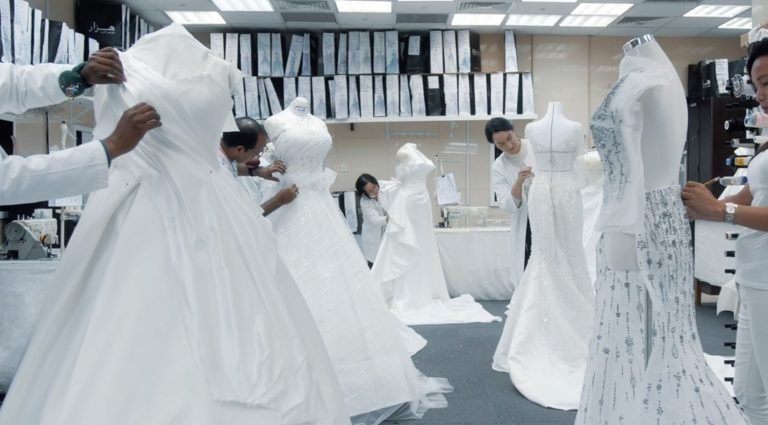
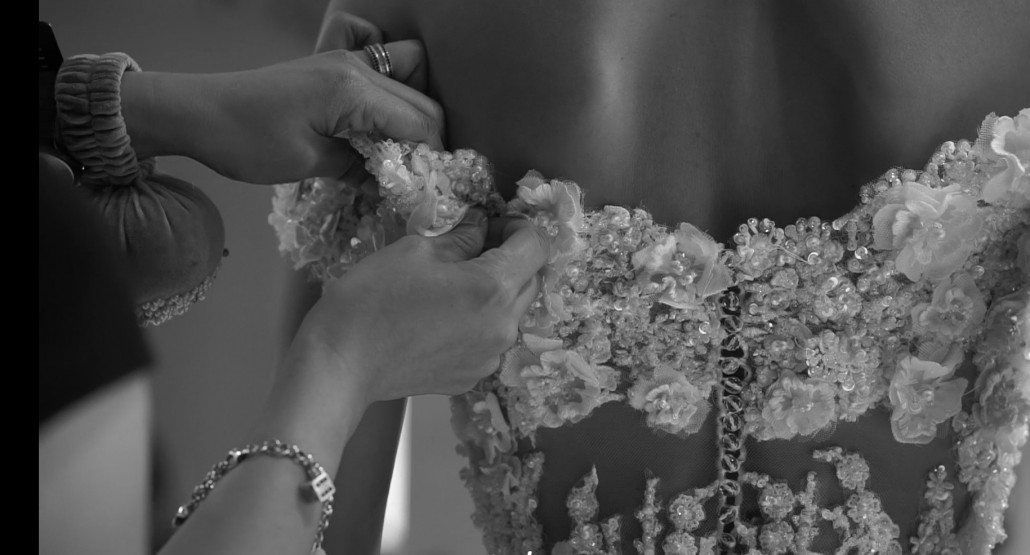
An alteration for a wedding dress can be practical, decorative, or both. Some changes improve the way the dress fits the body, while others refine the gown’s style so it feels closer to the bride’s vision. It should respect the gown’s structure, fabric, and original silhouette, especially when working with couture details.
The goal is not to force a dress into place but to make it feel natural on the bride, from the way the bodice holds its shape to how the skirt moves throughout the day.
Hemline and Length Adjustments
Hemline alterations help the gown fall correctly with the bride’s shoes, posture, and venue in mind. This is especially important for layered skirts, lace hems, embroidery, or delicate wedding dress fabrics that require careful handling. Even a small length adjustment can make the dress easier to walk in while keeping the silhouette elegant.
Bodice, Bust and Waist Refinement
The bodice often needs the most precise work because it shapes the upper part of the gown. Alterations may include:
- Taking in or letting out the waist
- Improving bust support
- Adjusting cups
- Refining boning
- Correcting gaps around the neckline
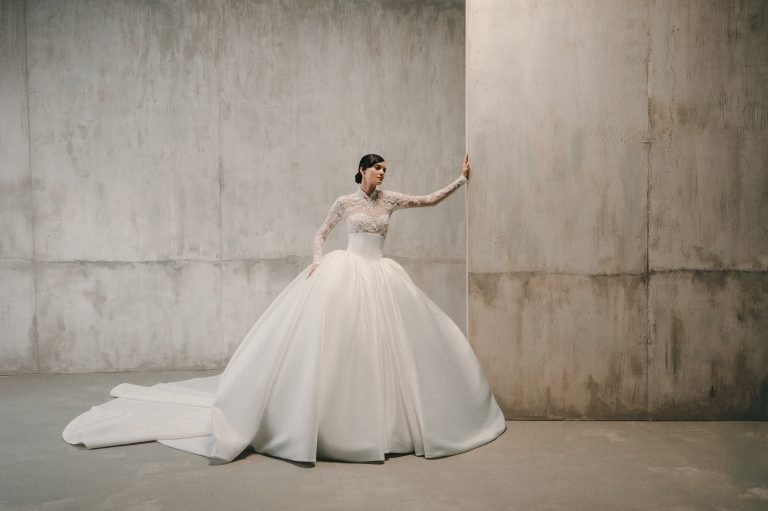
This type of alteration is usually helpful for structured silhouettes such as a ball gown wedding dress, corseted gown, or fitted mermaid style.
Straps, Sleeves and Neckline Changes
Some of the most modern wedding dress alteration ideas involve changing the upper part of the gown. A bride may want to add straps to a strapless dress, soften the look with detachable sleeves, create more coverage, or reshape the neckline.
Insider Tip: Brides drawn to a more elongated neckline may prefer to begin with a V-neck wedding dress rather than reshape a neckline too heavily during alterations.
A neckline change can affect the bodice structure, bust support, strap placement, and the gown’s overall balance, so starting with the right shape can create a cleaner, more intentional result.
Train and Bustle Adjustments
A train adds drama during the ceremony, but it also needs to work for movement, photos, and the reception. Alterations may shorten, reshape, or refine the train so it sits cleanly behind the bride.
A bustle can also lift the train after the ceremony, making it easier to walk, dance, and move without compromising the beauty of the dress.
When to Start Wedding Dress Alterations
If you are wondering when to get your wedding dress altered, a good rule is to begin around two to three months before the wedding. This gives enough time for the first fitting, major adjustments, refinement, and final checks without leaving every decision until the last few weeks.
Most brides can expect around three fittings, although the exact number depends on the gown. A bespoke wedding dress may follow a more guided timeline because design, construction, and fit are considered together from the start.
For brides choosing from an existing wedding dress collection, the schedule may depend on the fabric, layers, embellishment, silhouette, and requested changes.
The final fitting usually happens around one to two weeks before the wedding, once major alterations are complete. This is when the bride can check how the gown feels while standing, walking, sitting, and moving. It is also the right time to confirm the bustle, final length, and any wedding-day handling instructions.
Wedding Dress Alteration Timeline
- 8 to 12 weeks before: First fitting and major fit review
- 4 to 6 weeks before: Second fitting and refinement
- 1 to 2 weeks before: Final fitting and movement check
- Final pickup: Steaming, storage, and wedding-day handling guidance
Wedding Dress Alteration Costs
Wedding dress alteration prices vary because every gown is constructed differently.
A simple hem or minor bodice adjustment may cost less than extensive work on lace, beading, corsetry, or multiple skirt layers. In Dubai, standard bridal alterations may start in the several-hundred-dirham range, while complex couture work can cost more depending on the gown’s structure, embellishment, and level of handwork involved.
For a bespoke or couture gown, the best approach is to confirm alteration details during the consultation. The final cost can depend on how the gown is made, what needs to be adjusted, and how much specialist finishing is required.
What Affects Wedding Dress Alteration Prices?
Several factors can influence the final price, including:
- Fabric type and number of layers
- Lace, embroidery, or Swarovski® crystal details
- Corsetry, boning, and internal structure
- Hem complexity
- Sleeves, neckline, or modesty changes
- Train and bustle work
- How close the wedding date is
Expert Tips for Better Bridal Dress Alterations
- Choose the closest silhouette first. If you want a plunging neckline, fitted waist, or fuller skirt, it is usually better to begin with a gown that already has that structure than to rebuild the dress heavily during alterations.
- Bring the exact shoes and undergarments you plan to wear. Heel height, shapewear, cups, and bra support can all change how the hemline, bodice, and neckline sit on the body.
- Test movement during every fitting. Do not only stand still in front of the mirror. Walk, sit, turn, raise your arms, and practice gentle dance movements so the gown feels comfortable beyond photos.
- Ask about the bustle early. The train may look perfect during the ceremony, but it needs to be managed for the reception. Knowing how the bustle works also helps the person assisting you on the wedding day.
- Avoid major changes too close to the wedding. Complex neckline, sleeve, corset, or embellishment work needs time. The closer the wedding date is, the more important it is to focus on fit, comfort, and finishing rather than redesigning the gown.
Frequently Asked Questions
What should I bring to my bridal fitting?
Bring the shoes you plan to wear or a pair with the same heel height, along with your wedding-day undergarments or shapewear. You may also bring accessories, reference photos, and one trusted person who understands your style and can help you make clear decisions.
How much can a wedding dress be altered?
Many wedding dresses can be taken in by one to two sizes, but the exact amount depends on the gown’s construction. Seam allowance, fabric type, boning, lace placement, beading, and the original silhouette can all affect how much the dress can be changed without losing its intended shape.
Can a wedding dress be let out if it is too small?
A wedding dress can sometimes be let out if there is enough seam allowance inside the gown. If not, a bridal specialist may suggest other solutions, such as adding discreet panels or converting the back into a corset style, depending on the design and fabric.
Can a wedding dress be altered after weight loss?
Yes, a wedding dress can usually be altered after weight loss, but timing matters. Tell your bridal specialist as early as possible so the changes can be planned carefully. Larger adjustments may need more than one fitting to protect the gown’s structure, balance, and overall silhouette.
What can be done if the wedding dress is too long?
If the dress is too long, the hem can often be adjusted to suit your shoes, height, and walking comfort. For gowns with layered skirts, lace edging, or embellishment, the process may require more care. A bustle can also help manage the train after the ceremony.
The Final Fit
The right bridal dress alterations should make your gown feel as beautiful as it looks. From the hemline to the bodice, every detail should support your comfort, movement, and personal style. To refine your gown with expert guidance, book an appointment with Hazar Haute Couture and begin your bridal fitting journey with confidence.