How Long Should Your Wedding Dress Be?

Hazar Haute Couture | May 25, 2026
When you step into your wedding dress, the length shapes everything from how the gown falls to how confidently you move through the day. A hem that’s too long can feel heavy and awkward. One that’s too short can affect the elegance of the silhouette.
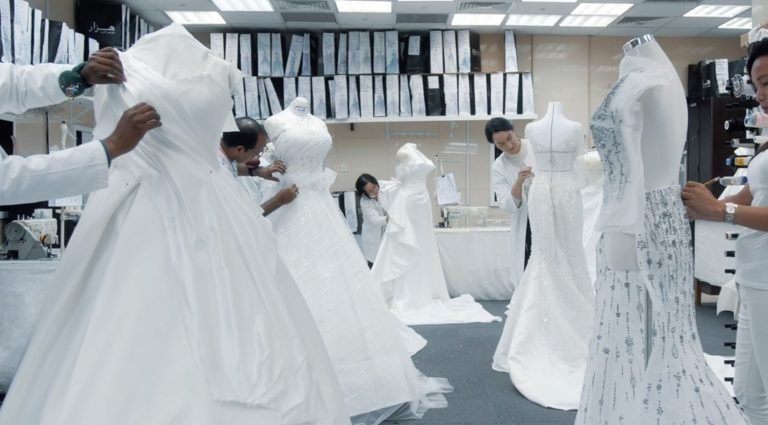
Finding the right wedding dress length is not about following one rigid rule. It’s about proportion, setting, and the way the dress is made to move with you. At Hazar Haute Couture, the hem is never an afterthought. It’s shaped with the same couture precision as the rest of the gown.
Whether you’re drawn to a sweeping floor-length gown or something lighter and more modern, knowing how long a wedding dress should be is one of the details that makes the entire look feel effortless.
Key Takeaways
- The right wedding dress length should feel as effortless as it looks, with the front hem lightly skimming the floor rather than dragging or falling too short.
- The best hemline is shaped by proportion, movement, and setting, not by one fixed rule.
- Floor-length gowns offer timeless formality, while tea-length, ankle-length, and high-low styles bring a lighter, more modern mood.
- The shoes, silhouette, fabric, and train all influence how the final length should fall on the day.
Table of Contents
- What is the proper length for a wedding dress?
- Wedding dress lengths explained
- What affects the right wedding dress length?
- Frequently Asked Questions
- When the hem feels right, so does the dress
What is the proper length for a wedding dress?
For most full-length gowns, the proper wedding dress length is one that lightly skims the floor at the front without causing you to step on it. It should feel elegant and easy to move in, rather than heavy, bunched, or noticeably short. Final hemming is usually done with your wedding shoes on, since the heel height changes where the dress falls.
That said, there is no universal rule for every bride. A floor-length gown is the classic choice, but the right hemline also depends on the silhouette, fabric, and setting. At Hazar Haute Couture, the final length is considered part of the whole silhouette, so the gown feels balanced, refined, and effortless from the first step to the last.
Wedding dress lengths explained
The wedding dress length shapes the mood of the gown as much as the silhouette itself. Here is a quick guide to help you know which one fits your wedding, your style, and your personality:
Floor-length wedding dresses
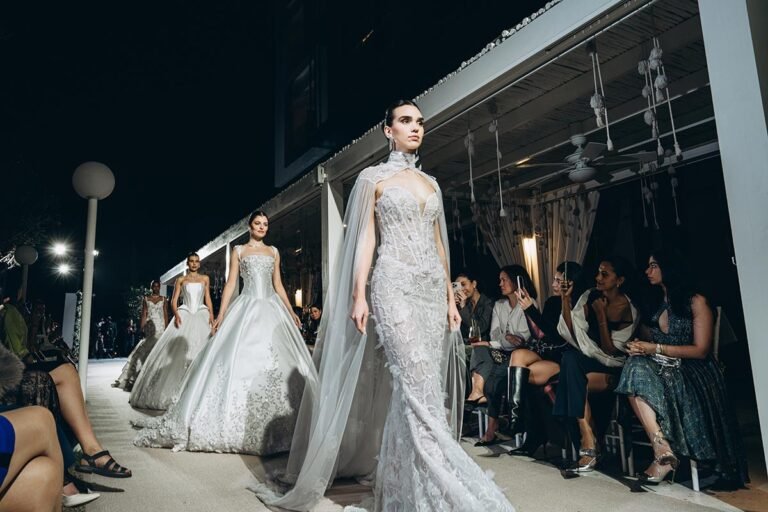
Floor-length gowns are the most traditional bridal option. The hem usually falls to the floor or lightly skims it, creating a long, uninterrupted line that feels elegant, formal, and timeless. This is often the default choice for brides who want a classic sense of occasion, especially when paired with a train.
Best for:
- Wedding theme or venue – Formal weddings, ballroom receptions, church ceremonies, and classic evening celebrations.
- Silhouette and dress style – A-line dresses, ball gowns, mermaids, and other full-length couture silhouettes.
- Overall effect – Brides who want to create a longer, more continuous line through the body.
- Shoes – Heels or formal bridal shoes that help set the final hem at the right point.
Tea-length and ankle-length gowns
Tea-length and ankle-length gowns are lighter interpretations of bridal attire. Tea-length styles usually fall between the knee and ankle, while ankle-length gowns sit lower and offer slightly more coverage. Both lengths feel polished, but they reveal more of the shoe and often bring a fresher, more modern energy to the overall look.
Best for:
- Wedding theme or venue – Civil ceremonies, destination weddings, beach weddings, garden weddings, and second looks.
- Silhouette and dress style – Sleeker, softer, or more fashion-forward gowns with a lighter visual finish.
- Overall effect – Brides who want ease of movement or a length that feels less formal and more relaxed.
- Shoes – Statement heels, embellished sandals, or any bridal shoe worth showing.
High-low and shorter bridal styles
High-low and shorter bridal styles feel more directional and contemporary. A high-low hem keeps the front shorter for ease and movement while preserving drama at the back, and shorter gowns bring a playful, confident edge to bridal dressing. These styles are especially appealing for brides who want to move away from a strictly traditional look.
Best for:
- Wedding theme or venue – Contemporary weddings, outdoor celebrations, city venues, and less formal settings.
- Silhouette and dress style – Modern, editorial, or statement-led bridal styles with a strong point of view.
- Overall effect – Brides who want to highlight the legs, create a lighter visual effect, or emphasize movement.
- Shoes – Standout heels, crystal details, embellished flats, or shoes that deserve to be part of the look.
What affects the right wedding dress length?
The right wedding dress length is shaped by more than tradition. It also depends on how the gown works with your shoes, venue, silhouette, fabric, and whether the design includes a train. These details affect not only where the hem falls, but how comfortably and confidently the dress moves with you throughout the day.
Your shoes
Your shoes are one of the first things that affect the wedding dress hem length. Even a small change in heel height can alter where the front of the gown falls, which is why bridal fittings are typically done with the actual wedding shoes or footwear of the same height.
Your shoes also shape the overall proportion of the look, so the hem should be considered alongside your wedding accessories.
Your venue and setting
The venue also shapes the right hem length. A ballroom can support a longer, more sweeping finish, while a garden or outdoor setting often calls for something lighter and easier to move in.
For beach wedding dresses, many brides prefer a hem that feels lighter underfoot and more natural in the setting, especially when the gown is designed for movement rather than formality alone.
Your silhouette and fabric
Silhouette and fabric shape the way a hem falls just as much as the measurement itself.
An A-line gown usually creates a softer, more fluid line, while a mermaid or sheath dress makes the hem feel more precise and body-aware. Ball gowns carry volume differently, and structured fabrics will never move quite the same way as lighter, more fluid ones.
At Hazar Haute Couture, that balance is considered with couture precision, so the final length feels refined, intentional, and true to the gown as a whole.
Whether you want a train
A train adds length to the back of the gown, but it is separate from the front hem. The front of the dress should still fall at the right length for standing and walking comfortably, while the train adds drama as it trails behind. This allows a gown to feel elegant and easy in motion, while still carrying the ceremony and presence of a longer finish.
Frequently Asked Questions
Should a wedding dress touch the floor?
For a full-length gown, the front of the dress should usually just touch or lightly skim the floor. It should not drag so much that you step on it, and it should not sit so high that the line of the gown feels interrupted.
How long should a wedding dress be with heels on?
Your dress should be hemmed while you are wearing your wedding heels, or a pair of the same height. Even a small change in heel height affects where the front of the gown falls, which is why shoes are part of the fitting process.
Can a wedding dress be slightly shorter in the front?
Yes, it can, especially if the design is intentional or the setting calls for easier movement. High-low gowns are one example, but even full-length dresses may sit a touch higher in front for comfort, to suit outdoor venues, or to give a lighter, more modern feel.
When the hem feels right, so does the dress
The right length should feel elegant, comfortable, and true to the way you want to move on the day. Once the hem, shoes, and silhouette feel in balance, the whole gown comes together more naturally. Explore Hazar’s wedding dress collections or book a fitting to find the length that feels right for you.